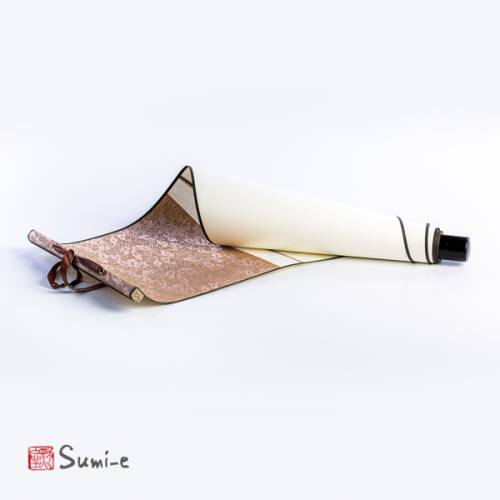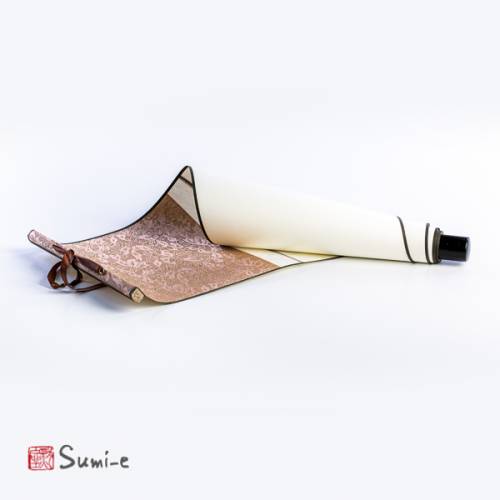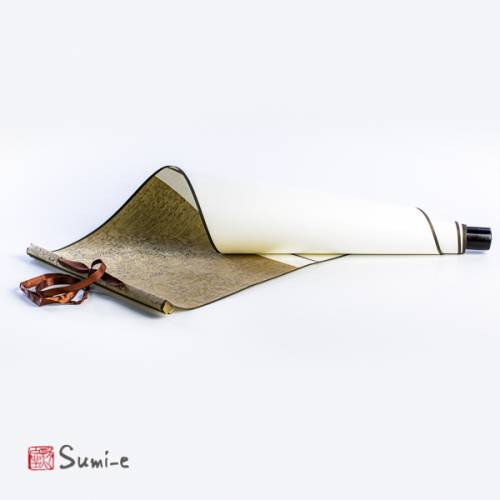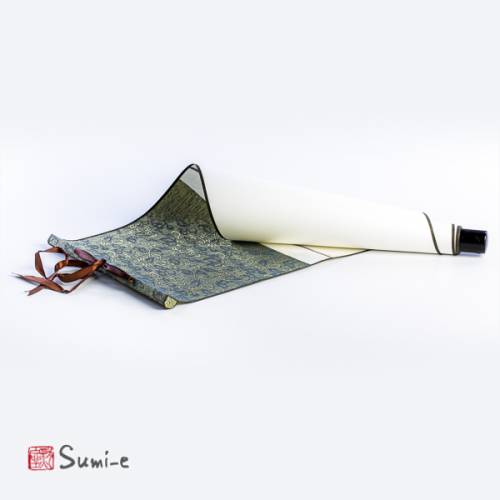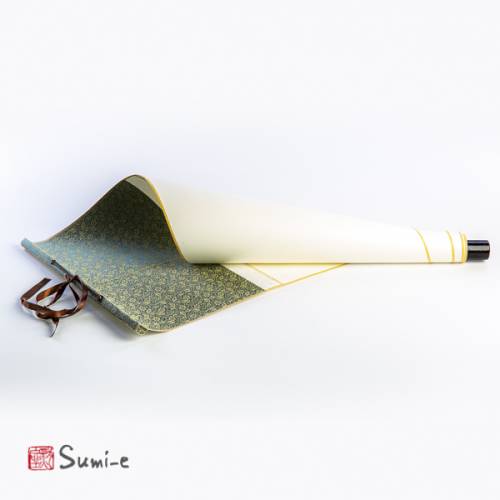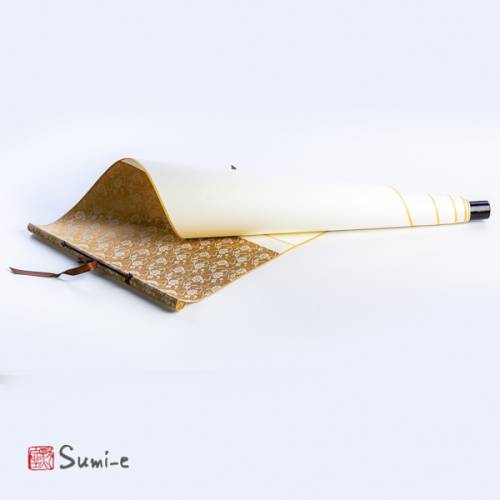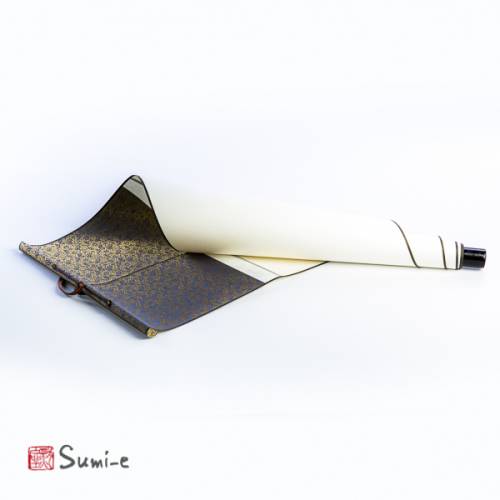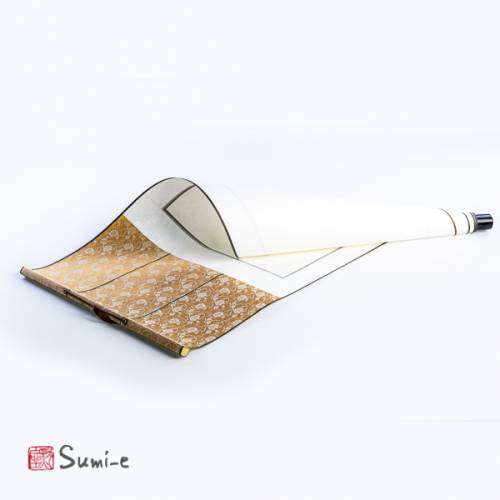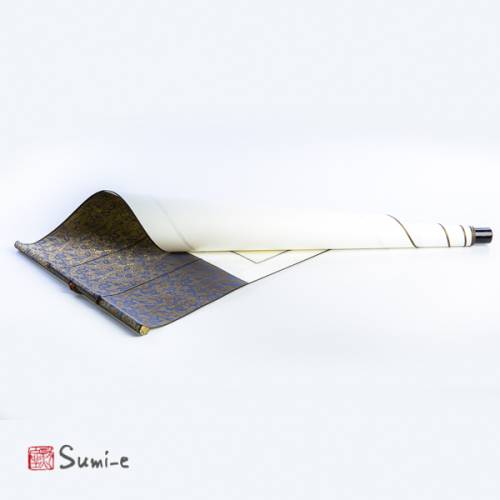
In this gallery, we present the traditional kakejiku (or kakemono).
The most commonly used medium for Sino-Japanese paintings is the scroll (known as ‘scroll’ in English, ‘kakejiku’ in Japanese, and ‘guazhou’ in Chinese), which is usually presented in a vertical format, and more rarely in a horizontal one.
Each scroll consists of three elements: rice paper, silk and wooden cylinders.
In the centre of the scroll is the rice paper on which the painting is executed. The coloured silk, on the other hand, surrounds the paper and acts as a frame. Finally, attached to the two shorter ends of the scroll are two lacquered wooden cylinders. As well as keeping the kakejiku taut with their weight once hung on the wall, the cylinders allow the painting to be rolled up for transport or storage.
Please note: the silk differs in length at the top and bottom. Traditionally, the lower part is shorter as it represents the earth, whilst the upper part is longer as it represents the sky.
We recommend not hanging kakejiku in direct sunlight or in rooms with excessive humidity. Do not pull the fastening cord too tight.